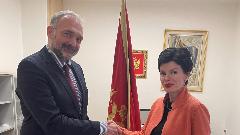





Did you know that in Montenegro, there are still medical devices containing mercury? Yes, that toxic liquid known as mercury isn’t just an old chemistry textbook story—it’s a serious threat to human health and the ecosystem. The head of the World Health Organization (WHO) office in Montenegro, Ms. Brajović, openly warned about this issue during a recent training for healthcare institutions. Montenegro is a signatory to the Minamata Convention, an international treaty that clearly mandates reducing and eliminating mercury use, but how well is this actually being implemented?
Mercury – The invisible enemy in hospitals
Imagine this: hospitals and health centers in Podgorica, Berane, Mojkovac, and Kotor still have devices containing mercury. This liquid is extremely toxic, and even tiny amounts can cause serious health and environmental problems. Managing waste containing mercury isn’t like throwing away regular trash—it requires expertise and special care. Adnan Efović from the Podgorica Health Center points out that until now, this topic was almost unknown in healthcare practice.
Training as the first step towards safer healthcare
WHO organized training for healthcare workers to improve knowledge and skills for safe handling and gradual removal of mercury-containing devices. This project, supported by international partners, is a significant step towards modernizing and protecting human health and the environment.
Montenegro and international obligations
As a signatory to the Minamata Convention, Montenegro has a clear obligation to reduce and eliminate mercury use in the healthcare sector. However, reality shows that the path to complete removal is still long and requires continuous efforts. Institutions like the Institute of Public Health, Clinical Center of Montenegro, Metrology Institute, and other key players are involved in this process.
Why does this matter?
Mercury isn’t just a chemical element—it’s a silent killer that can endanger the health of patients, medical staff, and the wider community. Its toxicity can lead to serious neurological and other health problems. Environmentally, mercury can contaminate water and soil, threatening entire ecosystems.
What’s next?
The training organizers announced continued activities to ensure sustainable replacement of all mercury-containing devices. This is not just a health issue but also about fulfilling international obligations and protecting future generations.
Conclusion
A healthier and safer healthcare system isn’t built overnight, but today’s steps are crucial. If you think this is just another boring environmental topic, think again—mercury in hospitals is a real threat that deserves your attention. And you, do you have an old mercury thermometer at home? Maybe it’s time to get rid of it! Or tell us in the comments how you see this problem—is Montenegro on the right track or is this just a drop in the ocean?
Don’t stay silent, because mercury certainly isn’t!