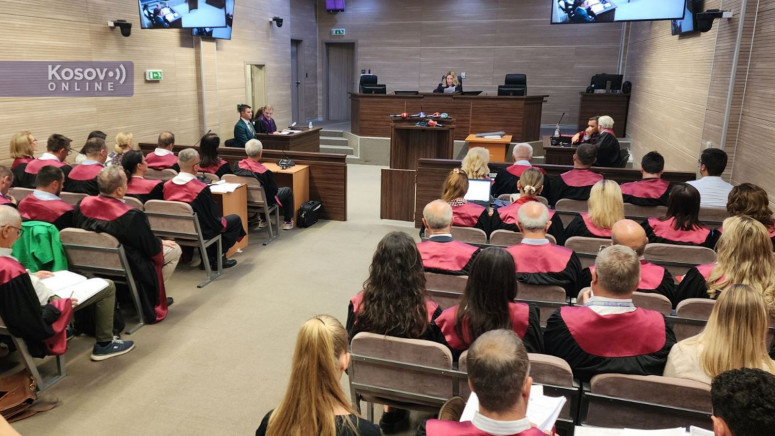




The Basic Court in Pristina has started an in absentia trial against 53 accused for mass killings and other war crimes against Albanian civilians in the Đakovica region during the “Evil River” military operation in 1998. The accused, including former high-ranking officers of the Serbian Army and state security, are not available to Kosovo judicial authorities and are represented by lawyers. The trial has attracted significant media interest, with the indictment charging the accused with murders, torture, looting, and ethnic cleansing. Retired General Momir Stojanović denies involvement, claiming the indictment is based on false testimonies. The Humanitarian Law Center highlights the marginalization of Albanian victims and the lack of accountability of Serbian institutions for war crimes in Kosovo. The trial is part of a broader process of justice for war crimes but faces political and legal challenges, including non-extradition of the accused and lack of cooperation between Serbia and Kosovo.
Political Perspectives:
Left: Left-leaning sources emphasize the importance of justice for the victims of war crimes in Kosovo, highlighting the marginalization of Albanian victims and criticizing the Serbian state’s failure to hold high-ranking officials accountable. They focus on the need for international and regional cooperation to ensure accountability and the protection of human rights.
Center: Centrist sources report the facts of the trial, presenting the legal proceedings and statements from both the prosecution and defense. They maintain a neutral tone, acknowledging the complexity of the case and the political sensitivities involved, while emphasizing the importance of due process and rule of law.
Right: Right-leaning sources tend to highlight the defense narratives, including denials of involvement by Serbian military officials and claims of politically motivated accusations. They may stress the sovereignty issues related to Kosovo’s status and criticize the Kosovo judicial system and international institutions for perceived bias against Serbs.